2026-09-16
Joanna Szczurowska
The First Polish Woman to Ski Down Denali
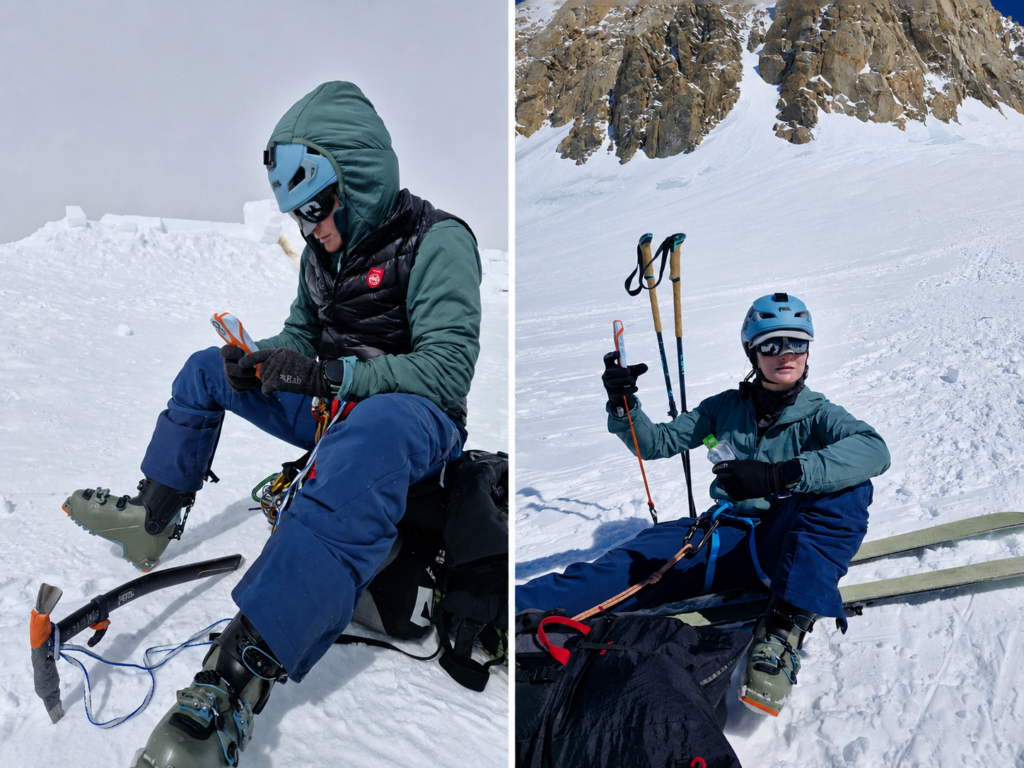
Anna Lewandowska @turboskrzat (Instagram) skied down Denali (Mount McKinley, 6,190 m), becoming the first Polish woman to do so.
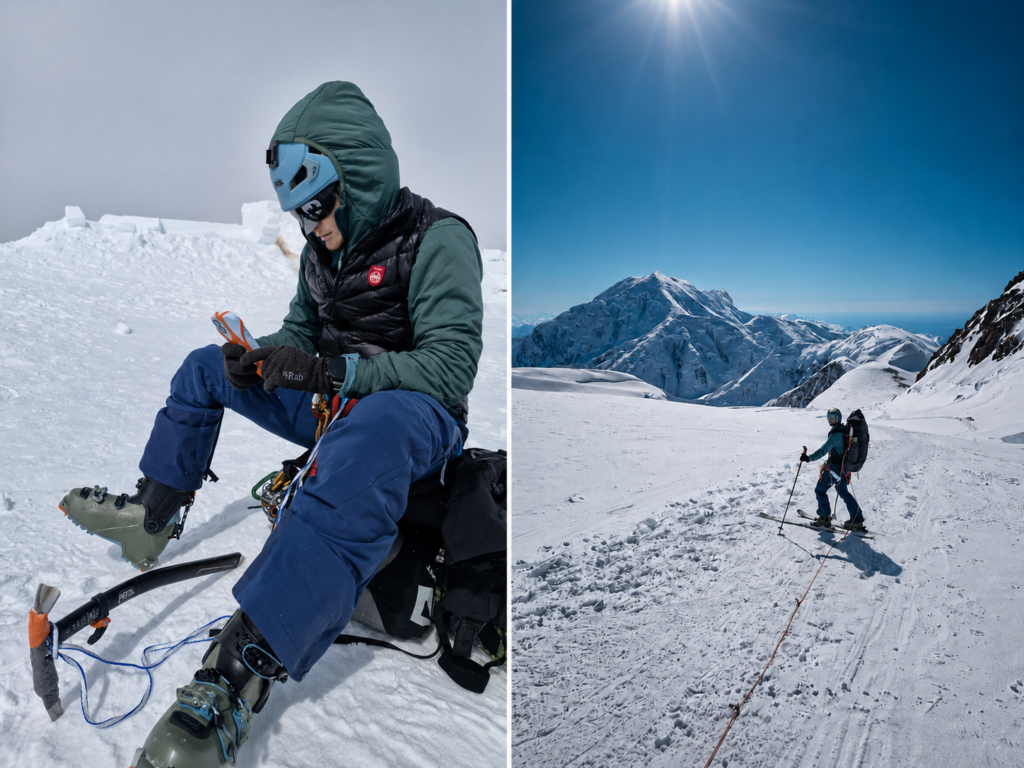
We were lucky enough to give Anna a KOALA phone tether just a few days before her departure, so we knew about her plans. We followed her updates with our fingers firmly crossed, and after she returned, we wanted to find out more about the expedition, how the idea came about and what it took to make it happen.
We invite you to read our conversation.
Turboskrzat – the first Polish woman to ski down Denali – shows that big goals often begin with small decisions and consistent work. In our conversation, she talks not only about the expedition to the highest peak in North America, but also about the preparations, moments of doubt, the logistics behind the project and what it feels like to return to everyday life after achieving a dream that, to many people, may seem almost impossible.
It is an open conversation about mountains, courage, the inner critic and the fact that even the greatest achievements do not always feel the way they appear from the outside.
Denali – the highest peak in North America and a dream for many mountaineers
Denali is the highest mountain in North America, rising to 6,190 metres above sea level. It is located in Alaska, within Denali National Park, and has long been regarded as one of the most demanding high-altitude mountains accessible to climbers without supplemental oxygen.
Although it is lower than the Himalayan eight-thousanders, its harsh climate, extreme temperatures and enormous elevation gain make it a much greater challenge than its altitude alone might suggest.
Until 2015, the mountain was officially known as Mount McKinley. The historic name Denali was subsequently restored. The name comes from the language of Alaska Native people and is commonly translated as “the High One” or “the Great One.” It is difficult to imagine a more fitting name – both in terms of the mountain’s scale and the challenge it presents.
Why is Denali so difficult?
At first glance, an altitude of 6,190 metres may not seem particularly extreme compared with the world’s eight-thousanders. In practice, however, Denali is an exceptionally demanding mountain.
One reason is its geographical location. The summit lies far to the north, at approximately 63° latitude. The high-latitude environment contributes to particularly demanding high-altitude conditions, making acclimatisation an important part of any Denali expedition.
Another major challenge is the weather. Denali is famous for rapid changes in conditions. Strong winds, heavy snowfall and temperatures falling below -30°C are not unusual. Even during an otherwise favourable season, multi-day periods of bad weather can make reaching the summit impossible, forcing teams to wait patiently in camp for a suitable weather window.
The enormous elevation gain is another factor. Unlike many high mountains where access to base camp is relatively straightforward, most Denali expeditions begin on the Kahiltna Glacier. From there, climbers have to overcome almost four kilometres of elevation before reaching the summit.
A Denali expedition is about much more than reaching the summit
Climbing Denali is a multi-week expedition that requires excellent logistical preparation. A typical expedition lasts between two and four weeks, and success depends not only on physical fitness but also on the weather and the ability to make the right decisions at the right time.
Most teams transport all of their equipment themselves. In addition to carrying heavy backpacks, climbers pull special expedition sleds loaded with tents, food, fuel, camping equipment and everything needed to survive for many days on the glacier.
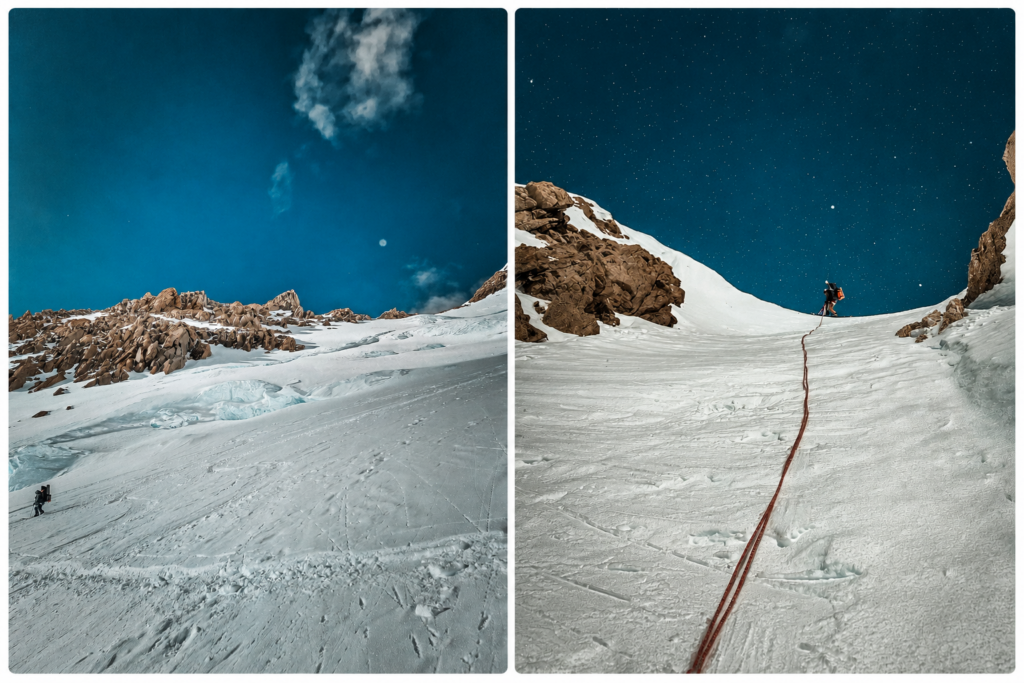
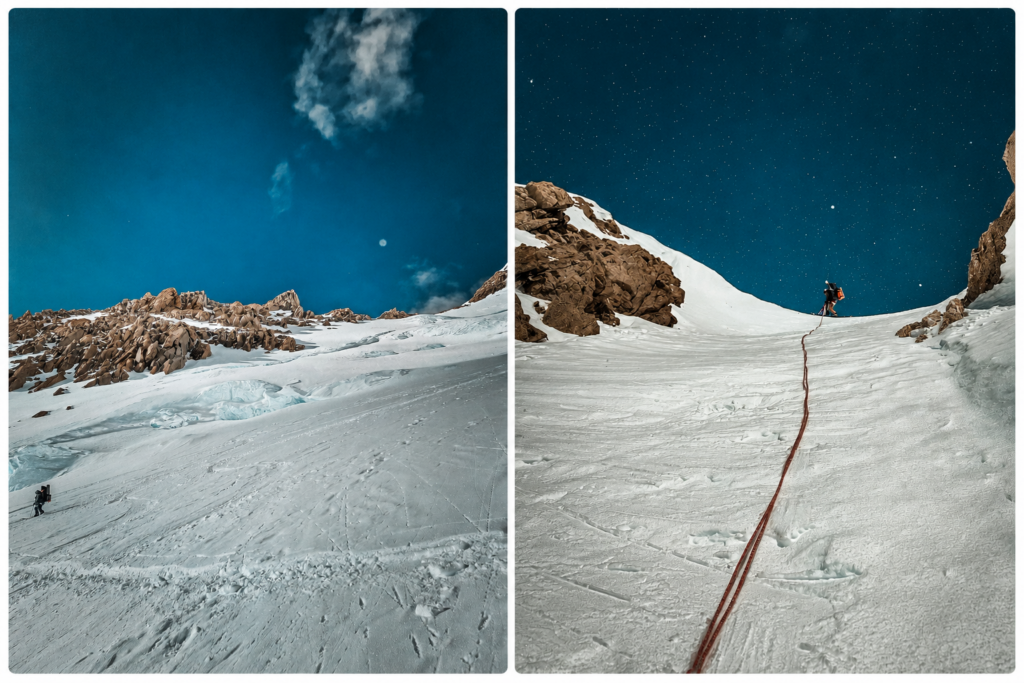
Along the route, teams establish a series of camps and repeatedly move equipment between them as part of the acclimatisation process. Days are spent travelling with heavy loads, digging platforms for tents, building snow walls for protection from the wind and waiting for the weather to improve.
It is this daily work that makes Denali one of the most logistically demanding high-altitude expeditions.
Who is Turboskrzat and where did the name come from?
Anna: It happened completely naturally. I’m 159 cm tall, hence “skrzat” – Polish for “gnome”. And “turbo”… well. I’ve always had a million ideas a minute, I find it difficult to sit still, and I probably do live life at a slightly higher speed than most people. A friend once called me that, and the name simply stuck.
How did the idea of an expedition to Denali come about? Had it been a dream since the beginning of your ski mountaineering journey, or did it appear only once you felt ready for such a major project?
Anna: Let’s start with the fact that I wouldn’t call myself a ski mountaineer. I do some things on skis, but it’s not the only thing I do in the mountains, and I certainly don’t think I have the skills and experience to proudly call myself a ski mountaineer. Or maybe I should?
A few years ago, it would never even have occurred to me that one day I would go to Denali and ski down the mountain.
The more time I spent in the mountains, the more I started looking for challenges that would be something more than simply climbing another summit. Denali was an idea that developed in my mind over several years – mainly because of the financial side of such an expedition, let’s be honest.
But my dreams of Alaska and Denali initially had nothing to do with skiing. That part came later, once we decided that we were going there this year and started analysing how we wanted to do it.
My husband and I both dislike snowshoes, so taking skis was a fairly natural decision. Then came the thought: if we’re taking them anyway, why not take them all the way to the summit and try to ski down?
I think the most important moment was when I stopped wondering whether I could do it and started planning how to do it.
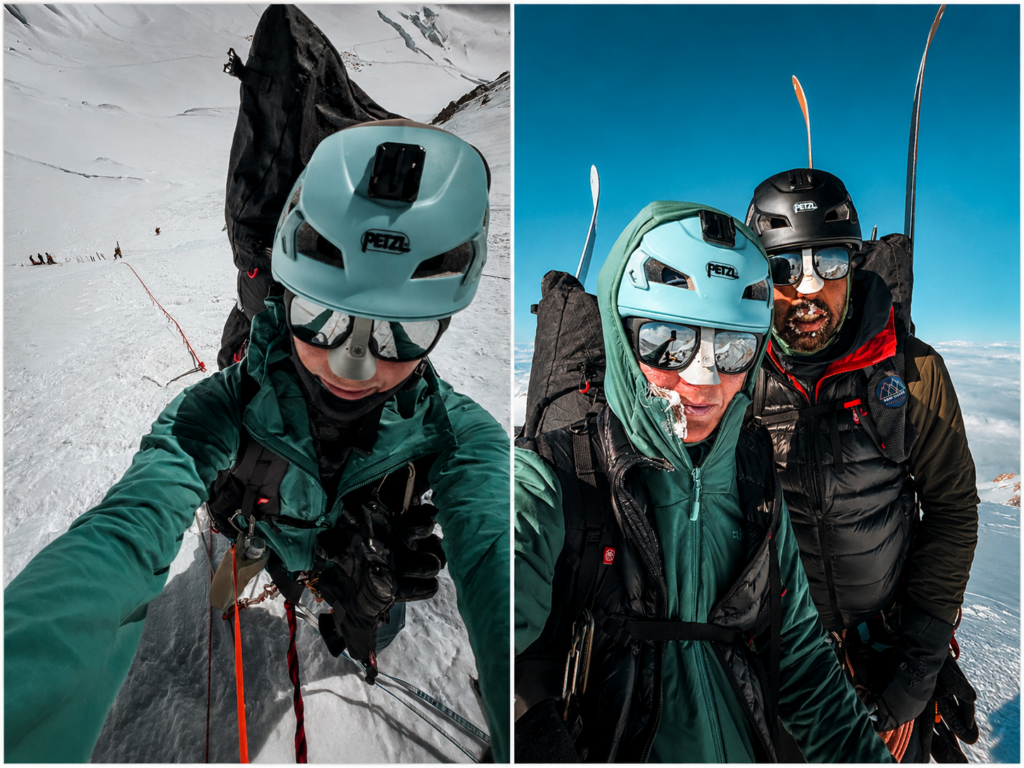
The climb or the ski descent – which was more difficult?
Anna: The climb was physically demanding. Any activity in the high mountains is demanding. It wasn’t even just about summit day, but every single day from the beginning of the expedition.
Pulling the sled – it’s difficult to describe just how frustrating that can be – carrying a heavy backpack, dealing with the weather… everything that is so characteristic of Denali really takes its toll.
Physically, we were extremely well prepared for this expedition. Really. But mentally, the ski descent was definitely a much greater challenge.
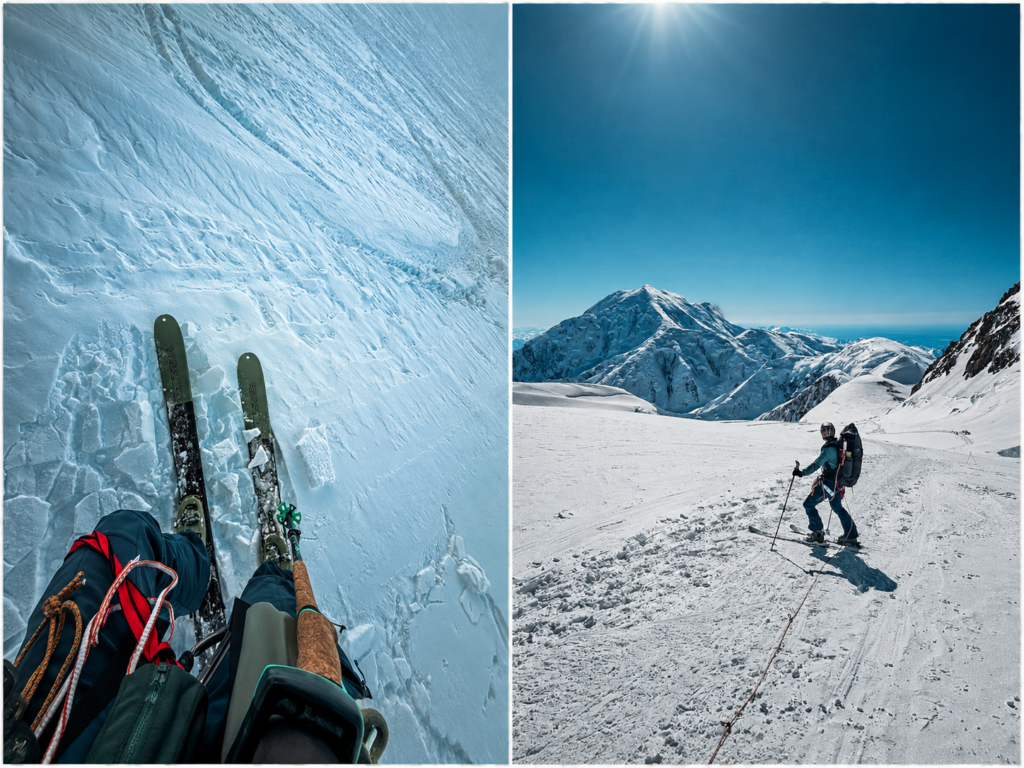
And it had absolutely nothing to do with the pressure of being the first Polish woman attempting something like this. It was more about the conditions that day – mainly hard, wind-affected snow and so-called blue ice.
The expedition and summit push were not planned around making a complete ski descent from the summit. We had the skis with us as, well… an extra? We knew that we would try to ski, but not at any cost. And secondly, we weren’t planning a single uninterrupted descent all the way to base camp because we still had to collect our camps.
Of course, it can be done in a better style – as one complete descent – and then you can go back to dismantle the camps, or have somebody else do it. There isn’t one single recipe for this kind of expedition, although people often seem to think there is.
So perhaps I should actually say that the greatest challenge was dealing with other people’s opinions?
On Instagram, you show both the beautiful moments and the moments of doubt. Was there a point during the expedition when you genuinely thought, “This might not work”?
Anna: Yes. When we were at C2 and the forecast showed no weather window at all for the next two weeks.
But this is Denali – sometimes the forecast changes faster than you can refresh the page.
Apart from that, though, I don’t think so. In many respects, this expedition went well and was actually quite “comfortable”.
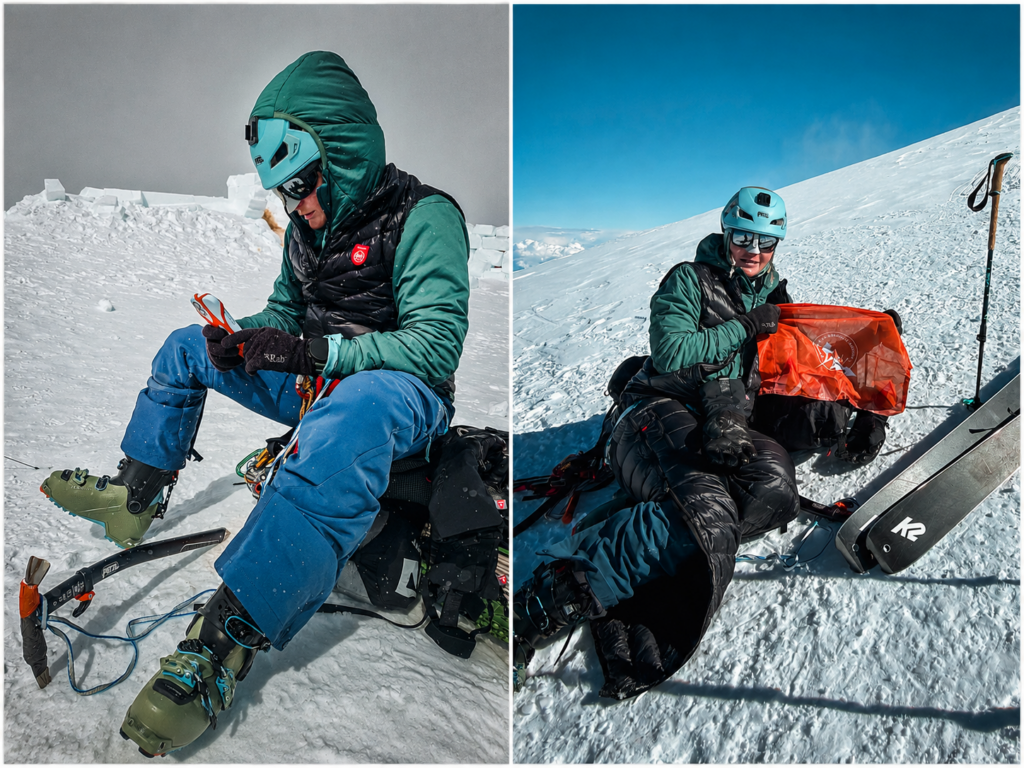
How do you prepare for a Denali expedition? What did the preparations really look like – not only training, but also organisation, logistics, equipment and financing?
Anna: Honestly? The training itself was probably the easiest part.
Logistics, putting together all the equipment, looking for gear partners, planning transport, food, insurance… all of that took the most time.
These are months of work that almost nobody sees afterwards. The expedition itself lasts two, three or four weeks, but the intensive preparations can easily take more than six months.
And you have to combine all of that with your regular job. I work full-time in the IT industry.
Was there a moment during the ski descent that will stay with you forever? Not necessarily the most spectacular one, but the most emotional?
Anna: Yes. The first few seconds just below the summit, immediately after starting the descent.
A moment earlier you’re standing on top of the mountain filled with enormous emotion, and then suddenly you have to switch all of it off completely and focus on every single movement because the conditions won’t forgive a mistake.
That was when it really hit me: I’m actually doing this. I’m really skiing down Denali.
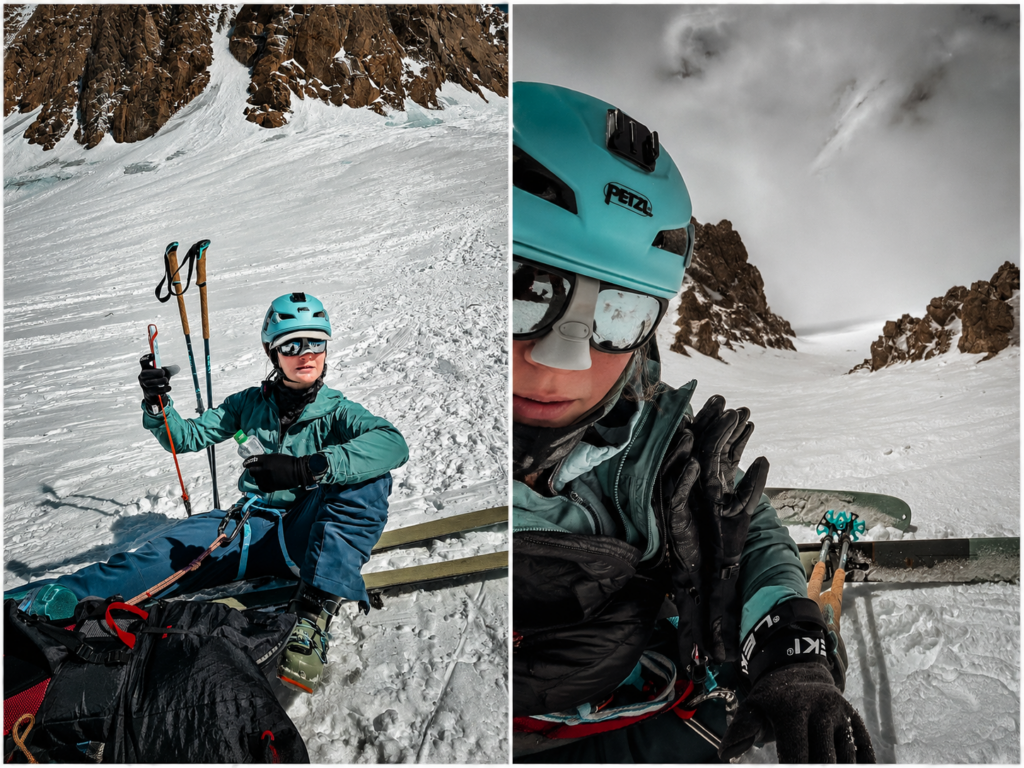
After climbing and skiing down Denali, do you feel more satisfaction, relief or… a sense of something missing and a desire to start planning the next goal?
Anna: At first there was happiness and, at the same time, enormous relief. Then came satisfaction.
And now… emptiness and doubts about what I’ve actually done.
I’ll be honest: there are two wolves living inside me. One says that I did something really amazing, while the other says that it wasn’t such a big deal – that the descent wasn’t done all at once, that it wasn’t complete, that I chose a couloir where the first section had to be descended on a rope, and so on.
Some of the comments online don’t help either, and my inner critic is doing very well at the moment.
And then there’s that post-expedition emptiness. It’s like coming home from summer camp when you were a kid.
But I’m already beginning, cautiously, to think about the next projects. I suppose that’s just how I am. I like completing one goal and, a moment later, starting to wonder what’s next.
What does the first day after returning from an expedition like this look like? Is it easy to return to normal everyday life?
Anna: First, a shower. A really long one. Then fresh food. And a bed.
After that, there’s the long journey home, going back to work, catching up with everyday life and enjoying all the comforts of civilisation again.
But eventually you still catch yourself missing the mountains.
Paradoxically, life can feel easier there, where every day you have one simple goal and a few straightforward tasks.
Do you have any mountain ritual before a major expedition? Something you never leave home without?
Anna: I make lists. Lots of lists.
I check everything several times because I know that in the mountains, if you’ve forgotten something, you often can’t simply go out and buy another one.
Apart from that… I eat my favourite foods.
I don’t think I have any other rituals. Oh, wait – sorry! I go for a manicure, haha. Just so that at least for a few days I can have nicely groomed hands.
Is there something you always pack even though common sense tells you, “Why are you carrying this?”
Anna: Sweetened condensed milk in a tube and/or chocolate paste tubes. They’re quite heavy, but I know they’ll improve my mood.
And definitely far too many wet wipes.
If you could go back five years and give one piece of advice to your younger self – the future Denali climber – what would it be?
Anna: Stop waiting until you feel ready.
I don’t think there is ever a moment when you feel one hundred percent ready. Prepare as well as you possibly can and simply start taking action.
Do you already have plans for your next adventure?
Anna: Of course.
If there were no more dreams to turn into goals, I’d probably get bored pretty quickly.
For now, I don’t want to reveal all the details, but I can promise one thing: it will be high and it will be ambitious – at least for me.
When? I don’t know yet.
Do you have a motto or a piece of advice for other women?
Anna: Don’t wait for someone else to tell you that you’re ready. And don’t try to prove anything to anyone.
Do things that genuinely excite you.
But when you feel that it’s better to turn back, do it – and don’t be afraid of that decision. It isn’t a failure.
And remember that big goals aren’t reserved for a chosen few. Most of the time, they begin with one small step and a decision: “I’ll try.”
Then you discover that many of the boundaries were mainly in your own head.
I have to remind myself of that regularly too, and I’m still learning to approach life this way.
You can also read about Anna Lewandowska’s Denali climb and ski descent on the Andrzej Zawada Polish Himalayan Foundation page and on Wspinanie.pl.
Anna, thank you very much for your time and for sharing your story with us.
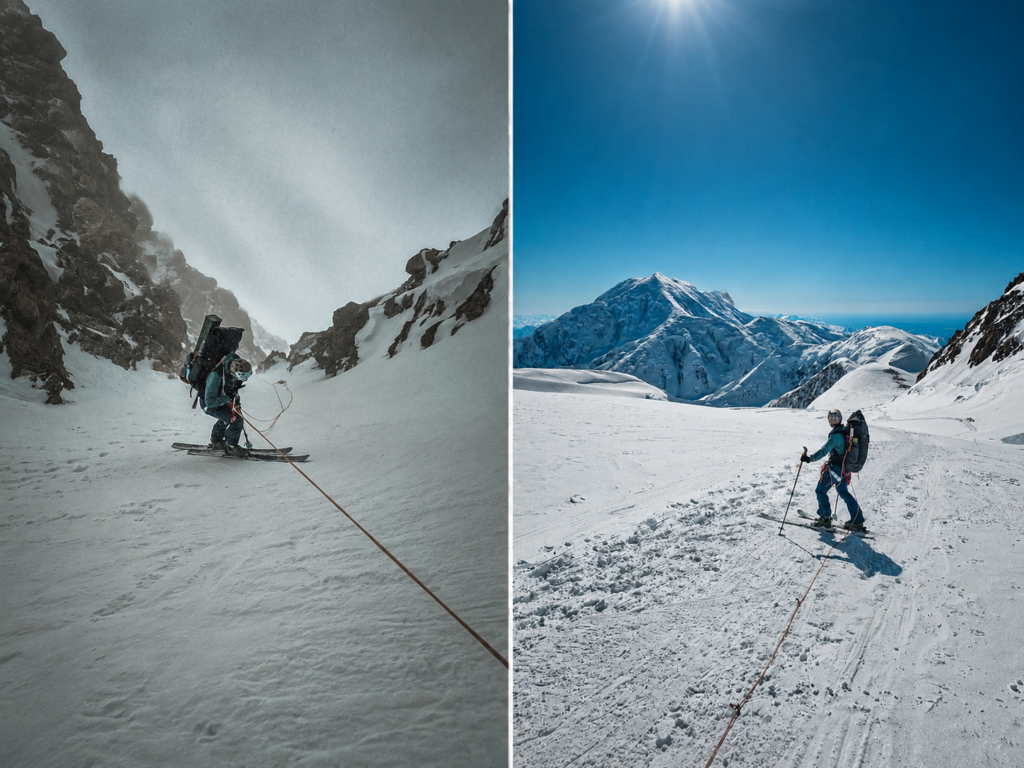
As we mentioned at the beginning, Anna Lewandowska – @turboskrzat – took a KOALA phone tether with her to Denali, helping her keep her phone secured throughout the expedition.